
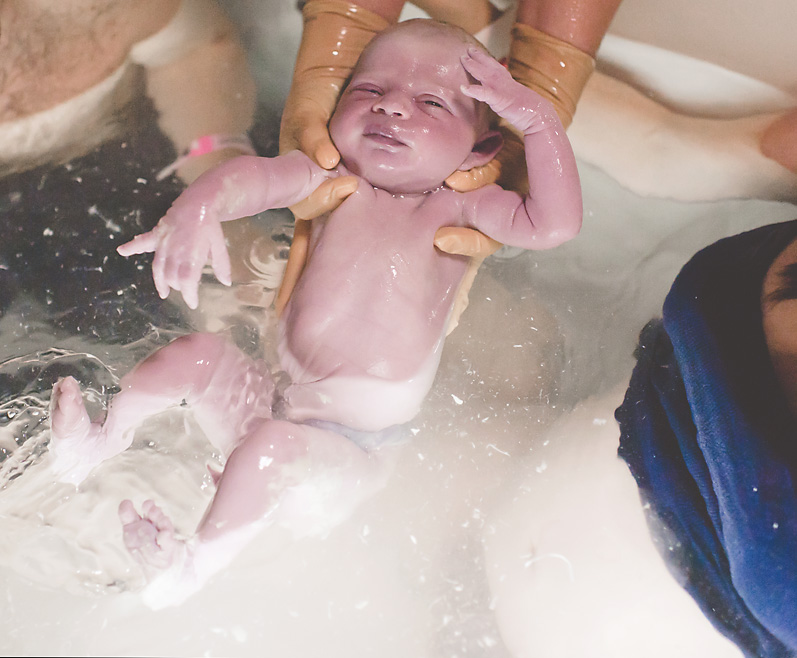
The Midwives of New Jersey – WaterBorn™
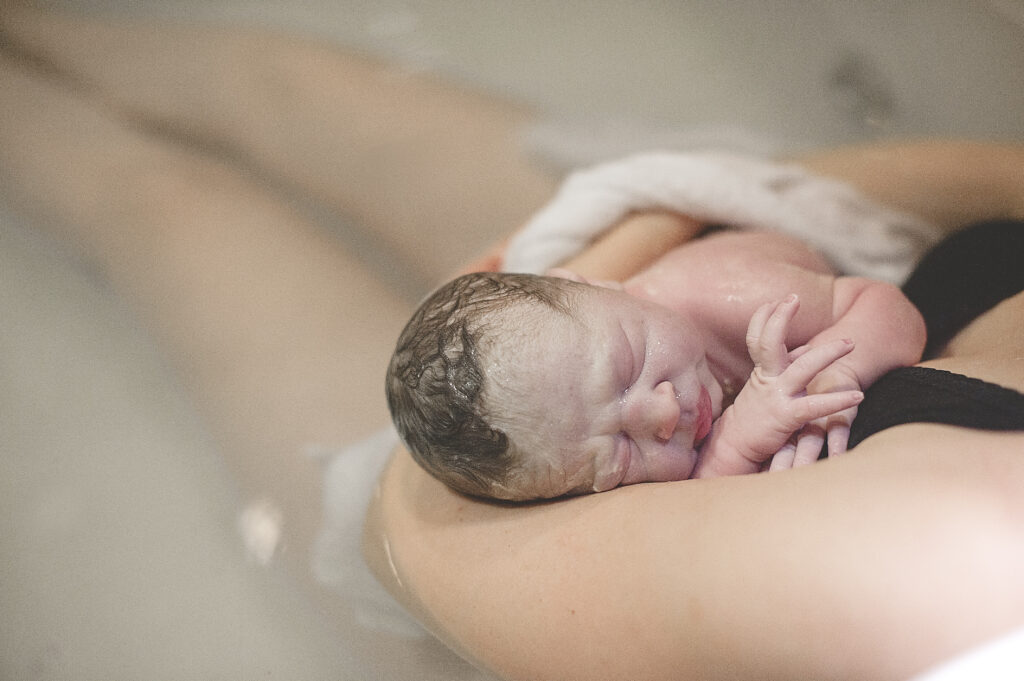
The Midwives of New Jersey are in the business of changing the world through birth. We believe that encouraging and supporting women in natural birth enables them to see how incredible and powerful they are and will change them as women and as mothers forever. For this reason, we are pleased to offer our clients the option of a Waterbirth.
We offer Waterbirth in the comfort of your very own home with the use of one of our inflatable birth tubs, at Hoboken University Medical Center or at two Birthing Centers. Each of our Midwives and Midwife Assistants have been trained in our proprietary WaterBorn™ program and are experts at overseeing and assisting in the labor and delivery of our water babies.
Our Credentials
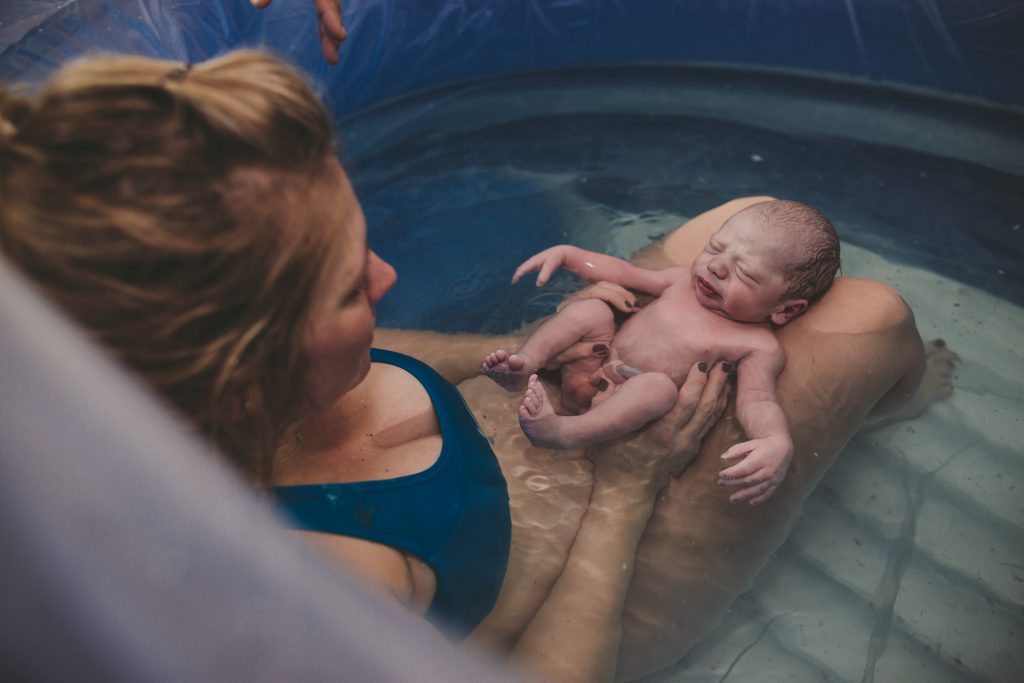
We caught our first water baby in March 2000. Since that time, we have become the area’s leading expert in Waterbirth, delivering over 1600+ waterbabies without a single complication related to the birth taking place in the water! In fact, over 40% of our clients choose to have Waterbirths.
When our clients express the desire for a waterbirth, we provide them with a consent form outlining the circumstances in which water labor and birth can occur. During active labor, we stay with the woman almost continuously. We monitor the mom and baby very carefully minute to minute, assessing the safety of laboring and delivering in the tub. We strongly believe that the key to safety is the presence and assessment of the midwife.
What is Waterbirth?
Waterbirth, sometimes referred to as the “midwife’s epidural,” is an evidence-based option that involves labor—and sometimes birth—taking place in warm water. Waterbirth supports normal physiologic birth by promoting relaxation, reducing stress hormones, and encouraging mobility and movement during labor. Research shows that immersion in water during labor can decrease the perception of pain, reduce the use of pharmacologic pain medication, and support shorter or more efficient labors.
Midwives of New Jersey utilize established guidelines to ensure waterbirth is offered safely and appropriately. This includes careful client selection and continuous assessment of maternal and fetal well-being during each stage of labor. Waterbirth is supported by evidence as a safe and effective option that aligns with the midwifery model of care—prioritizing informed choice, individualized support, and respect for the natural processes of birth.
Why Waterbirth?
We truly believe that waterbirth is the single best thing to happen to birth, ever! Not only does it provide women with an alternative method for pain relief, but it also enables us to create a sacred space for women to labor and deliver their babies. We have also found that women are much more successful at accomplishing an unmedicated birth due to the comfort they find in the tub, because water immersion decreases adrenaline and increases endorphins and oxytocin. High levels of oxytocin, endorphins and adrenaline are also the perfect hormonal cocktail for the initiation of the most important bond a human will ever experience, so laboring in water is great!
Additionally, perineal trauma is often significantly lessened in Waterbirth because women can better tolerate the time required to stretch the perineum in a warm tub of water. And, because the baby will not fall but actually float in the water, the mother is able to assume a very commonly preferred position, on her knees with the baby delivering beneath her, which makes it less difficult to deliver the baby, causes less perineal trauma, and allows her greater autonomy. Delivering in the water is wonderful for both mother and baby!

And best of all, our clients often report that even though they had people around them during their waterbirth, they felt completely alone to bond with their babies after the birth; this is nature at its best.
How Safe is Waterbirth?
In April 2014, waterbirth made national headlines when the American College of Obstetricians and Gynecologists (ACOG) and the American Academy of Pediatrics (AAP) released a joint Opinion Statement that questioned the safety of waterbirth. In their statement, they suggested that waterbirth should be treated as an experimental practice that should occur in the context of a clinical research study. Their conclusion was based on their opinion that waterbirth does not have any benefits and may pose dangers for the newborn.
In response to the statement, the American College of Nurse Midwives (ACNM), the American Association of Birth Centers (AABC), the Royal College of Obstetricians and Gynaecologists (RCOG), and the Royal College of Midwives (RCM) issued a joint statement, and the Midwives of New Jersey released statements endorsing waterbirth as an evidence-based, safe option. Additionally, the AABC released preliminary data from nearly 4,000 waterbirths from birth centers all over the United States, supporting waterbirth as safe for mothers and their babies. When waterbirth is offered within proven guidelines, as is our Waterborn™ program, it is incredibly safe. Learn more about the safety of waterbirth in our review of the largest waterbirth study.
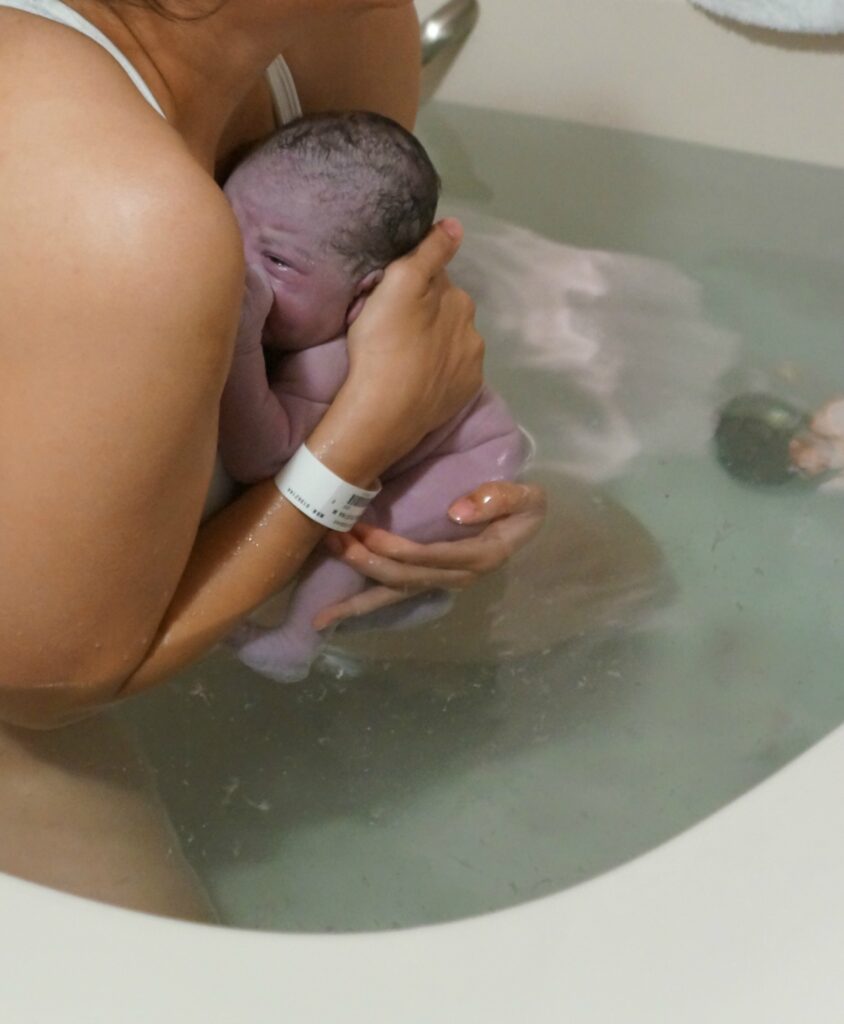
The Midwives of New Jersey have offered waterbirth since the year 2000 without any complications related to the birth being in the water. Over 1,500+ beautiful, healthy waterbabies later, we have living proof that waterbirth is safe!
We have managed plenty of normal childbirth complications during waterbirth; we are equipped to manage shoulder dystocia, hemorrhage, abnormal fetal heart tones, and umbilical cord being wrapped around the baby’s neck. We have also successfully managed babies requiring resuscitation quickly and efficiently with no more morbidity than if the woman had labored and delivered in the air. One of the most common concerns is the umbilical cord being wrapped around the baby’s neck. In fact, waterbirth has been found to decrease the transmission of Group B strep, which has been known to cause pneumonia in newborns. An article published by Cohain looks at the studies included in a Cochrane review of immersion in water during labor and birth (Cluett et al). Cohain states that “The (Cochrane review) literature provides a single case of early onset newborn Group B Strep (GBS) among 4432 waterbirths, suggesting that low-risk women who give birth in water may have a far lower rate of newborn GBS than women who have a dry birth. The last reported rate of newborn GBS for dry births was 1 in 1450.”
The 2006 Joint statement from the Royal College of Midwives “Immersion in Water During Labour and Birth”, states that “All healthy women with uncomplicated pregnancies at term should have the option of water birth available to them and should be able to proceed to a water birth if they wish.”
The Science Behind Waterbirth
There are a host of scientific reasons that help to explain why babies do NOT take a breath while underwater:
- Prostaglandin E2 levels from the placenta cause a slowing down or stopping of fetal breathing movements. When the baby is born, and the Prostaglandin levels are still high, the baby’s muscles used for breathing simply do not work, thus engaging the first inhibitory response.
- All babies are born experiencing mild hypoxia, or lack of oxygen. Hypoxia causes the baby to experience apnea and swallowing, not breathing or gasping.
- Fetal lungs are already filled with fluid. That fluid is there to protect the lungs and to keep the spaces open that will eventually exchange carbon dioxide and oxygen. For this reason, it is very difficult, if not improbable, for fluids from the birth tub to pass into those spaces that are already filled with fluid. One physiologist states, “the viscosity of the fluid naturally occurring in the lungs is so thick that it would be nearly impossible for any other fluids to enter.”
- The last important inhibitory factor is known as the Dive Reflex, which revolves around the larynx. The larynx is covered with chemoreceptors or taste buds. In fact, the larynx has five times as many taste buds as the whole surface of the tongue! So, when a solution hits the back of the throat, passing the larynx, the taste buds interpret the substance, and the glottis automatically closes, and the solution is then swallowed rather than inhaled.
Benefits of Waterbirth Include:
For the Mother:
- Buoyancy of water improves a woman’s ability to move around and change positions in labor. Water immersion also decreases energy expenditure for the mother.
- The tub creates a safe place for the mother to labor in warm water, where she feels “held and supported.
- Pain Management. Women have a significant decrease in pain, allowing them to be more focused and have greater control of their labor.
- Decreases blood pressure, decreases stress hormones, and elevates endorphins and oxytocin. Because of this type of hormone shift, labor progresses more efficiently with less discomfort to the mother.
- More controlled deliveries. Mothers are able to hold their babies on the perineum more easily to allow stretching and decrease trauma to the vulva. They feel less pain and pressure, and so are less out of control themselves as the baby delivers.
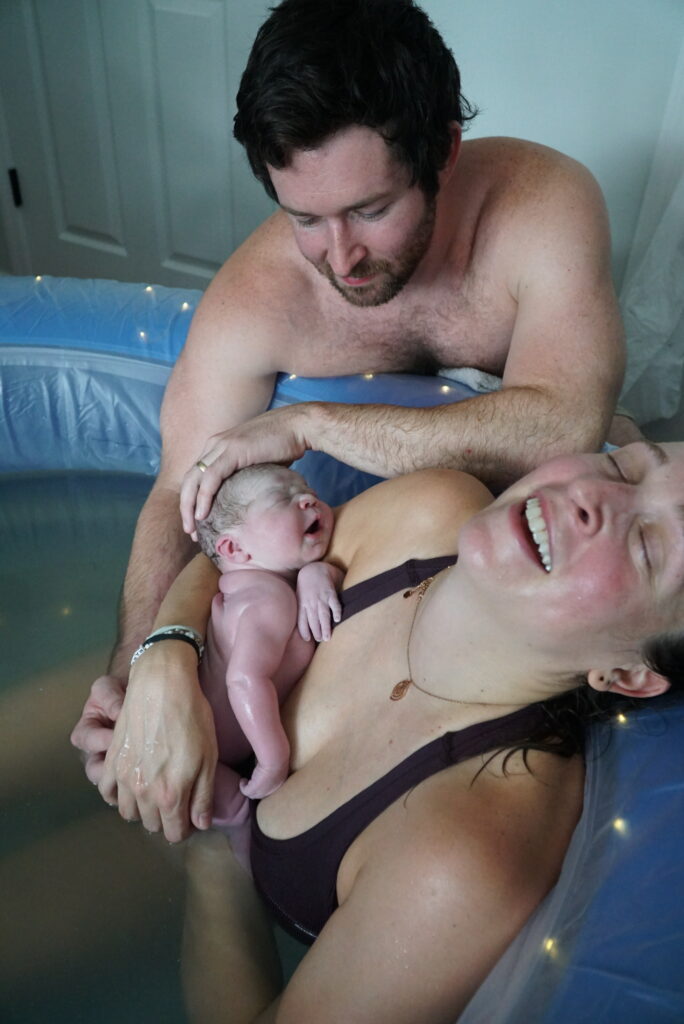
For the Baby:
- Gentle entrance into the world, directly into Mommy and Daddy’s arms.
- Less exposure to pain medication because the mother was able to tolerate the pain of her labor
- A huge dose of oxytocin from the natural birth assists in wiring the baby’s brain to connect emotionally with others
- Naturally born babies breastfeed instinctively
- Has a mother who is in an ecstatic state, who can bond deeply with her baby, children, and partner
For the World:
- Creates mothers who are strong and confident in their ability to mother
- Provides the optimal circumstances from the start of life for children to learn about love and to form intimate relationships
- Deepens family relationships
- Lowers costs to the healthcare system by decreasing intervention in labor and birth, which can lead to complications
Frequently Asked Questions About Waterbirth
Are waterbirths safe?
For healthy, low-risk pregnancies, waterbirths are considered a safe option when attended by trained Midwives and supported by appropriate protocols.
Can waterbirths be done at home?
Yes, waterbirths are commonly part of home births and freestanding birth center births. Birth pools can be set up in your home, and your midwifery team will bring or help coordinate all necessary equipment.
Do I have to give birth in the water?
No. Some women choose to use birth pools or birth tubs for comfort during labor and choose to give birth outside the water. Waterbirth is flexible and can change at any point during the birth process based on preference or medical need.
What is the difference between a birth pool and a birth tub?
A birth pool is a portable, inflatable tub specifically designed for labor and birth. It is deeper than a standard bathtub, allowing full submersion, greater freedom of movement, and easier position changes during different stages of labor. Birth pools are commonly used in home births and in some birth center settings.
A birth tub typically refers to a built-in bathtub found in a birth center or hospital.
Can I use water immersion during any stage of labor?
Water immersion is most commonly used during active labor, though some people choose to labor in the water earlier for comfort and relaxation. We will help guide when entering the water is appropriate based on your stage of labor, comfort level, and how labor is progressing.
What is the recommended water temperature for a waterbirth?
We carefully monitor water temperature for safety and comfort. During labor, water is usually kept between 95–100°F. During the pushing and birth stage, the temperature may be adjusted slightly to ensure both parent and baby remain comfortable.
How does water make labor pain more manageable?
Warm water promotes relaxation, reduces muscle tension, and may help ease discomfort during contractions. Many people report feeling more in control and better able to move and change positions throughout each stage of labor.
What if complications arise during a waterbirth?
We will continuously assess you and your baby throughout labor. If a complication arises, you can be assisted out of the birth pool quickly, and care will continue seamlessly.