

“I want natural childbirth, but I’m nervous. I don’t know what to expect.”
We hear this quite often. There is no way to fully know what labor will feel like until you are in it. It is an experience you can prepare for, but never completely predict.
What you can do is prepare yourself so that you meet labor with confidence when the time comes. We believe a woman’s body has been perfectly designed for birth, and preparation is not about fixing something broken. It is about learning to trust that your body that already innately knows how to do this. Our job as your birth providers is to educate, encourage, and support you in that work.
But before we get into how to prepare for labor and delivery, we want to talk about a pattern we see.
The Most Underprepared Women are Usually the Ones Planning an Epidural
Many women do not prepare for labor the way they should. This is not about whether or not you get an epidural. It is about a pattern we see, where “I’m getting an epidural” starts to mean “so I don’t need to do any childbirth preparation.”
If planning to get an epidural is the only plan, it leaves a few important things out. You still have to deal with a great deal of labor and you have to feel it up until the time you receive an epidural. That amount of time can be several hours as it includes early labor at home, the car ride to the hospital and waiting for the epidural anesthesia to be available! You also still have to push your baby out which can be more of a challenge if you cannot feel what your body is telling you.
Alternatively, a woman who is planning for natural childbirth understands that they need to prepare for labor pain. She gets really ready. She reads everything, and studies everything, she practices everything. She does her squats,practices breathing,bring her partner to every class, because she knows there is no epidural coming. She has to be ready for this.
So this article is not about whether you choose an epidural or not but rather how are you planning to handle the discomfort of whatever labor you feel. If you are weighing this decision, read this article on 3 Reasons to Skip the Epidural
How to Prepare for Labor
Stay Physically Active:
Labor is physical work, and requires endurance. Staying active through pregnancy is how you build endurance – so you keep going when labor is long, and you tire less easily along the way.
How can you stay active and prepare for the long endurance needed during labor?
Squats. Deep squats open the pelvis and build the leg endurance. Go slowly, hold at the bottom, and do not push through knee pain. A supported squat, holding a counter or your partner’s hands, does the same job if a deep squat does not suit your body.
Walking. A daily walk builds stamina and encourages good fetal positioning.
Birth ball. Trysitting on a birth or exercise ball in the evenings instead of the couch. Hip circles, gentle bouncing, figure eights. It positions your pelvis and stretches muscles.
Hands and knees. Spend time here daily. It relieves back pressure, gives your baby room to rotate, and it is one of the most useful positions in active labor, so you want it to feel familiar rather than new.
Yoga or Pilates. Yoga asks you to put yourself into an uncomfortable position and then relax into it, knowing the discomfort is doing good work. That is precisely what a contraction asks of you. Women who practice regularly walk into labor having already trained the response we most want them to have: not bracing against the sensation, but softening into it. The flexibility and strength are a bonus, and positions like cat and cow can help move your baby into an optimal position.
What about the days you cannot do any of it?
Some days the nausea or the exhaustion wins, or your sciatic nerve makes every step miserable. On those days, isometric exercise still counts. Press your palms together as hard as you comfortably can and hold for ten seconds. Sit in a chair, tighten your stomach, and hold your feet an inch off the floor. Stand with a hand on the wall, lift one knee, and push down on your thigh while you keep lifting. Anything that sets one muscle against another, or against an immovable object, keeps you strong. \
Read more about how to safely exercise in pregnancy
Prepare Mentally:
The muscles in a human body don’t work the way they are supposed to if they are tense and closed off. Learning to relax during labor will help all the muscles that are in use stretch and pull the way that is needed to deliver the baby. However, you cannot walk into labor and the pain of labor and simply tell your body to relax. This is a skill and process that you have to practice before you go into labor.
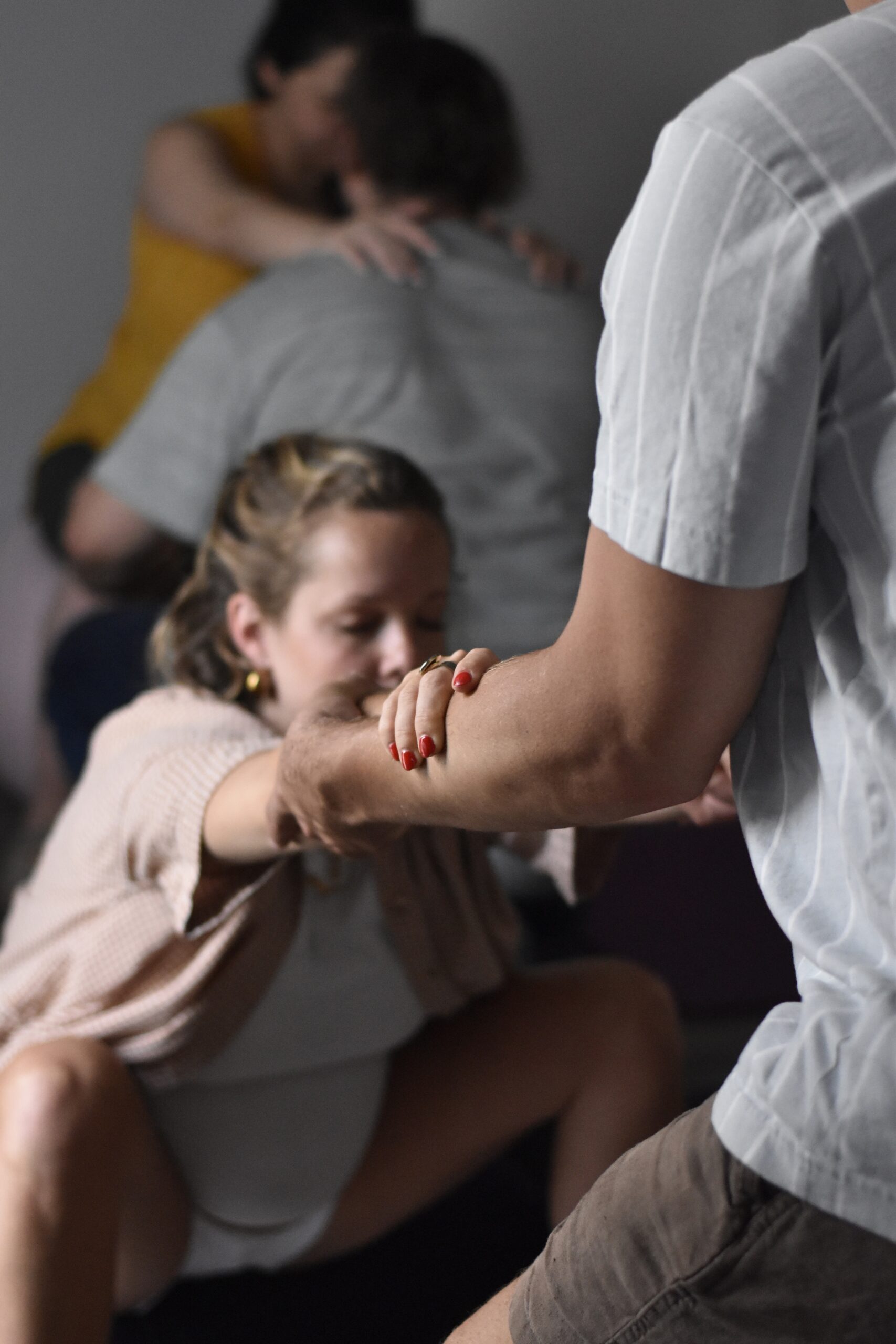
Planning the labor atmosphere. Breathing exercises, birthing positions, the music you want playing, a calming voice, or absolute silence. Being touched by a partner or simply being allowed to labor without touch are all things that need to be practiced and discussed before labor ever begins. Practicing deep breathing and meditation allows you to bring those items into labor without a lot of thought.
Understand what is actually happening. Fear feeds on mystery. Once you understand what a contraction is doing, that it builds, peaks, and ends, and that transition is short and means you are nearly there, the sensation stops being random pain and becomes knowledge.
Practice your coping tools before you need them. Nobody learns a breathing pattern mid-contraction. Choose two or three and rehearse until they are automatic:
- Slow breathing, with the exhale longer than the inhale
- One phrase you repeat: open, down and out, this one is almost over
- Counter-pressure on your lower back and hips, practiced with your partner so they learn how much pressure is enough
- Water. We truly believe waterbirth is the single best thing to happen to birth, ever, and nothing makes labor more doable and beautiful. Even a shower or a tub at home in early labor is among the most effective comfort measures available, and we use hydrotherapy heavily in labor.
- Movement: swaying, lunging, rocking, changing position every half hour
Rehearse them somewhere mildly uncomfortable, like holding a plank or standing in a cold shower. Not because labor resembles those things, but because they teach you to stay in your body when your body wants to quit.
Decide in advance what you will do with fear
Something will happen that you did not plan for. Fear becomes tension, tension makes contractions hurt more, and more pain makes more fear. The way out is a rehearsed response: a phrase, a breath, a hand to hold, someone whose job is to say this is normal, you are okay.
Rehearse the whole timeline, not just the peak. Most women picture the dramatic part. Picture instead the 2 a.m. early labor that goes on for nine hours and is not dramatic at all. That is the stretch that wears women down.
Prepare Your Support Person
Your partner will spend hours watching someone they love in pain with no idea what to do. That is a hard position to put someone in especially if they are unprepared. If they are prepared, your partner will feel empowered in the crucial role of labor support.
Give them specific jobs:
- Counter-pressure and hip squeezes, practiced with your feedback
- Tracking time, offering water and food without being asked
- •Knowing your preferences well enough to voice them when you cannot
The single most valuable thing a support person does is stay calm. Calm is contagious. So is panic or fearfulness.
Write Your Birth Plan
Try and keep it to one page, and treat it as preferences rather than a script.
Cover the things that stay true no matter how labor goes:
- Whether you want pain medication offered, or want to ask for it yourself
- Movement, eating, and drinking in labor
- Monitoring preferences
- The first hour after birth: skin to skin, delayed cord clamping, who holds the baby
- What matters to you if plans change and you end up with an induction or a cesarean
That last one gets skipped most and matters most. Preferences for the unexpected are still preferences. A cesarean can still be gentle, slow, narrated, with your baby on your chest. A mother and child are fearfully and wonderfully made, and should be treated with respect at all times, in every setting and every kind of birth. (More on writing the best birth plan & a free sample birth plan here.)
So What Does Preparation Actually Do for You?
Not a painless birth, and maybe not the exact birth you imagined but what it does give you is the ability to stay present when labor gets hard, to make decisions instead of having them made for you, and to come away feeling like a participant in your own birth rather than a passenger. Emerging from your birth feeling capable and confident puts you in the ideal position to step into motherhood.

 What You Should Know About Delayed Cord Clamping & the White Cord Trend
Leave a Reply